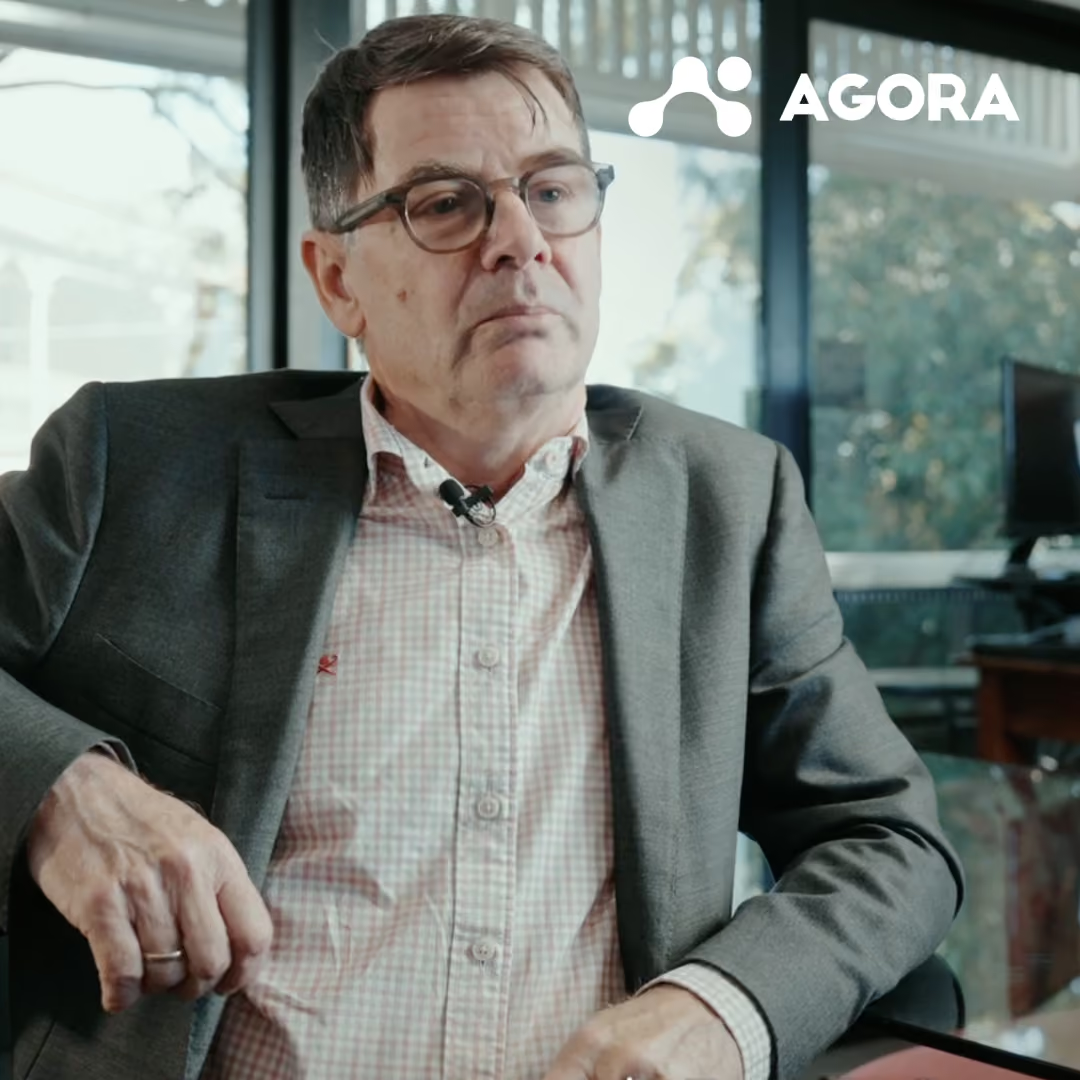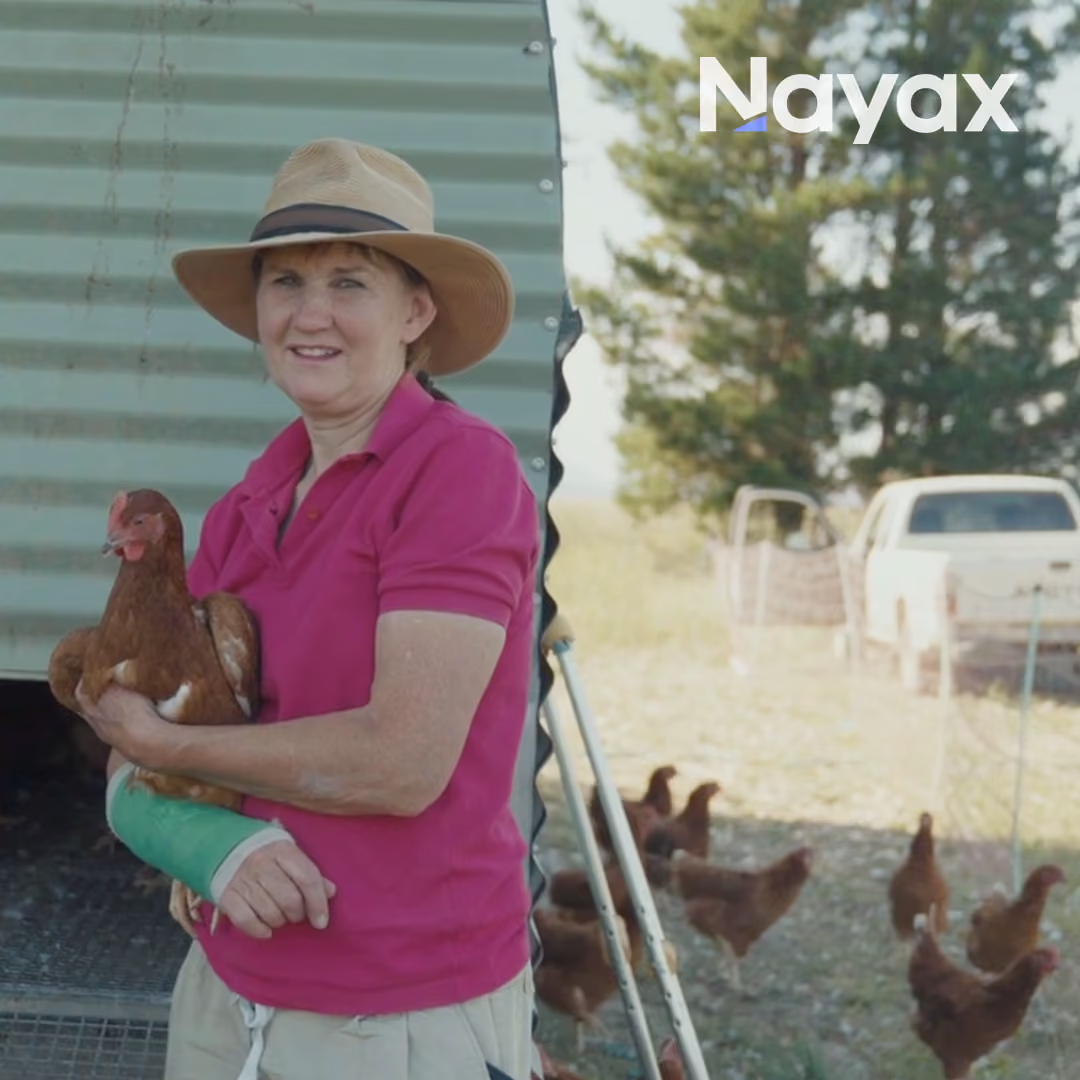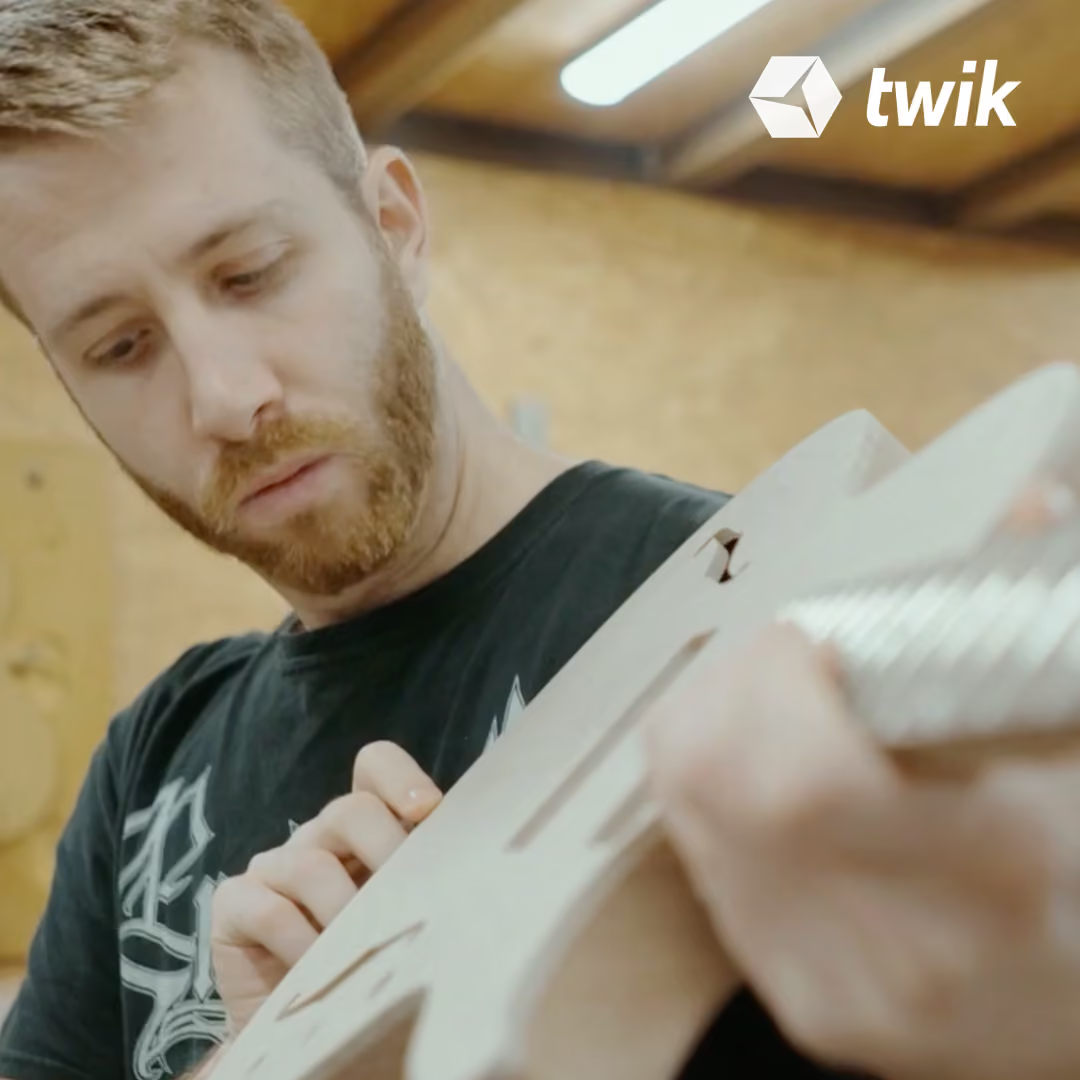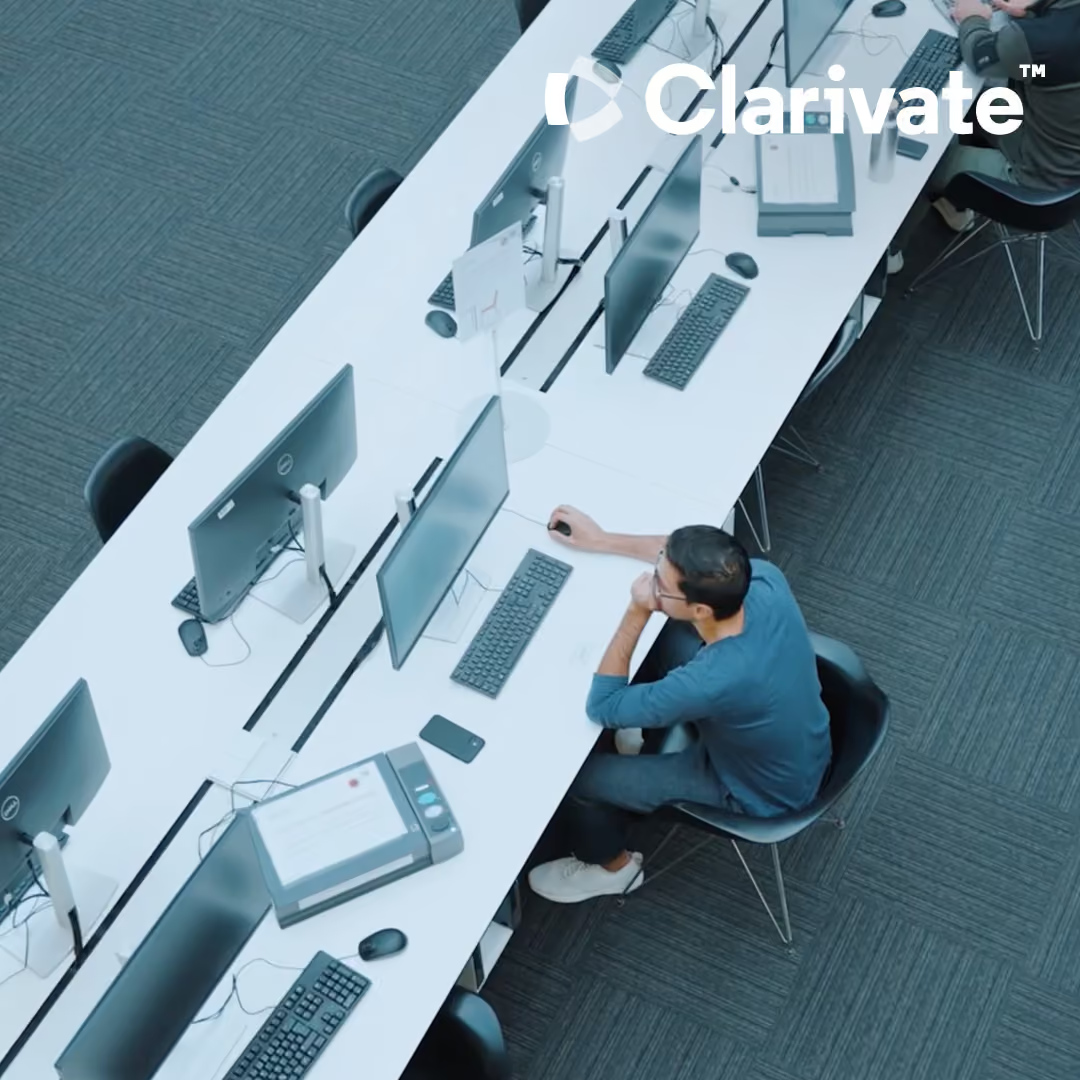

When a company decides to make employee testimonial videos, the first instinct is almost always the same. Put the CEO in front of the camera. They know the vision, they speak well, and they carry the title. It feels like the safe choice.
It is often the wrong one.
The CEO is the right person to set strategy and the wrong person to build trust with a skeptical buyer. The reason is simple. A prospect watching a founder talk about how great the company is hears exactly what they expect to hear. Of course the CEO thinks the product is great. They built it. Their job is to sell it. That built-in bias quietly cancels out a lot of what gets said, no matter how genuine it is.
A support rep, an engineer, or a customer success lead carries something the CEO cannot fake: the credibility of a regular person who has no obvious reason to oversell.
The "person like me" effect
This is not a hunch. The Edelman Trust Barometer, which has tracked trust across institutions for years, consistently finds that "a person like yourself" ranks among the most credible voices a company has, well ahead of a chief executive or an official company statement. People trust peers. They trust the person who seems to be in the same trenches they are.
In an employee testimonial video, that effect is doing real work. When a prospect watching from a similar role sees someone with their job title, speaking their language, describing the same daily problems, the message stops feeling like marketing and starts feeling like advice from a colleague. The title on screen matters less than the sense of "this person gets my world."
What the frontline knows that the C-suite does not
There is a practical reason too. The people closest to the work simply have better material.
A CEO talks in outcomes and vision. That is their altitude, and it tends to come out abstract. "We are transforming how teams operate." It is true and it is forgettable. A support rep talks in specifics because specifics are their entire day. "We used to get the same ticket about exports every Monday morning, and after the change it basically disappeared." That sentence is concrete, it is relatable, and it proves something. Buyers remember it because it sounds like a real Monday, not a keynote.
The best employee testimonial videos lean into this. Instead of asking your most senior person for a polished overview, ask the person who actually lives the problem to tell you about a normal week. You will get detail you could never script, delivered by someone the audience already half identifies with.
This is not about hiding leadership
To be clear, none of this means your executives should disappear. There is a real place for a founder on camera, especially in content about company values, the origin story, or where the category is heading. People want to know who is steering the ship.
The point is to match the messenger to the message. For trust and for proof, which is what most testimonial videos are really for, the relatable employee usually outperforms the title. For vision and direction, leadership fits. Mixing those up is how companies end up with a stack of well-produced videos that nobody finds persuasive.
How to pick the right employee for the camera
Not every great employee makes a great video subject, and that is fine. A few things to look for when casting from inside the company.
Pick someone close to the actual work, not someone who manages the people who do it. The closer they are to the problem, the more specific they can be. Pick someone who is comfortable being honest, including about the parts that were hard, because a little candor reads as far more trustworthy than relentless positivity. And pick someone who sounds like themselves rather than someone trying to sound corporate. The whole advantage here is that they are not a polished spokesperson, so do not coach that quality out of them.
Then brief them on topics, not lines. Tell them which problems and moments you want them to touch on, and let the words be their own. The texture of a real employee talking about real work is the entire point.
The takeaway
If your employee testimonial videos are underperforming, look at who is in them before you blame the production. A relatable frontline employee, speaking plainly about a problem your buyer recognizes, will almost always build more trust than a perfectly composed executive saying the company is excellent.
The CEO can tell people where the company is going. Let the person doing the work tell them what it is actually like. That is the version a buyer believes.
.avif)
.svg)
.avif)
.avif)

.avif)
.avif)

.avif)





.avif)